
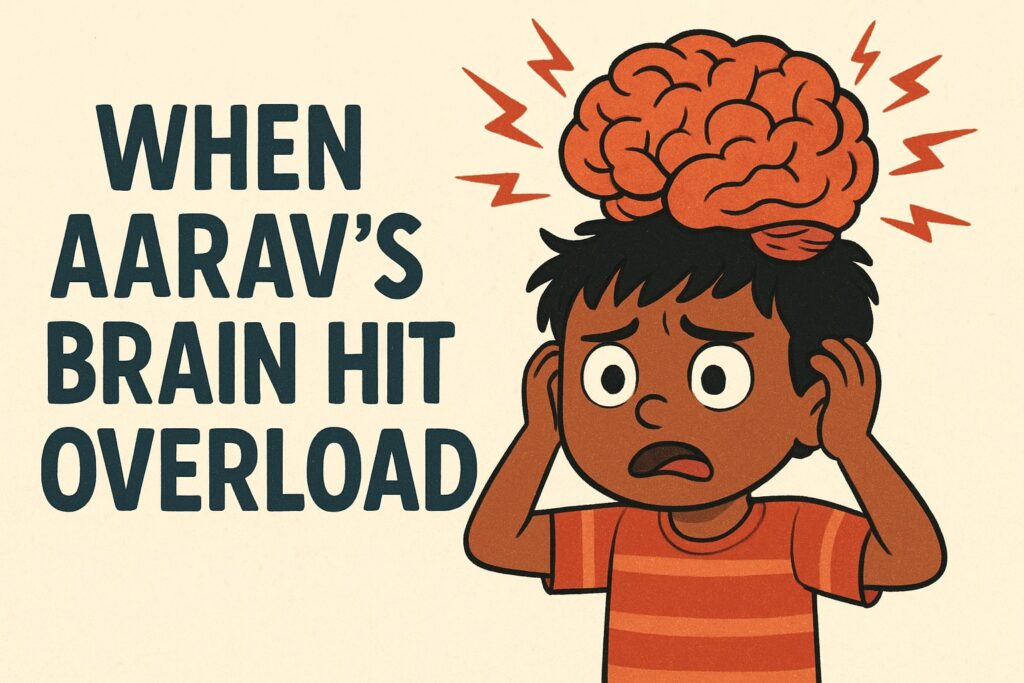
Every evening around 4 PM, Aarav’s parents could sense it coming.
The tension. The tiny frown. The sudden burst of tears over a toy car that wouldn’t roll straight.
What looked like defiance was actually distress.
His nervous system had been collecting sensory “noise” all day — classroom chatter, bright lights, new instructions, unexpected transitions.
By evening, his brain’s alarm center (the amygdala) was on full alert.
His prefrontal cortex, the rational part that helps him think, plan, and wait — had gone offline.
That’s not misbehavior.
That’s a brain running out of regulation fuel.
The Solution Wasn’t Punishment — It Was Prevention
His doctor didn’t suggest stricter limits.
She suggested rhythms.
Tiny, structured moments to help the nervous system breathe — before it breaks.
They called them Brain Breaks.
Jumping Breaks – For the Body That Feels “Too Much”
Every 90 minutes, Aarav gets two minutes to jump — on a trampoline, on the floor, or even hugging a pillow.
Here’s what happens inside:
- Jumping gives proprioceptive input (deep pressure and joint feedback).
- That input tells the brain, “I know where my body is.”
- The vestibular system recalibrates balance, and the brainstem releases serotonin — nature’s calm chemical.
In simple words: jumping brings his brain back online.
The body becomes the anchor for an overwhelmed mind.
Nature Breaks – For a Brain That’s Overstimulated
At sunset, Aarav and his mom step outside.
They feel the breeze. Watch the trees move.
Ten quiet minutes — no screens, no demands.
Inside the brain, something magical happens:
- The visual cortex responds differently to natural greens and blues — lowering cortisol, the stress hormone.
- Nature activates the parasympathetic system — the “rest and digest” network.
- Oxygen intake increases, helping the prefrontal cortex (attention center) recover.
Nature isn’t just beautiful.
It’s neurological therapy — free and powerful.
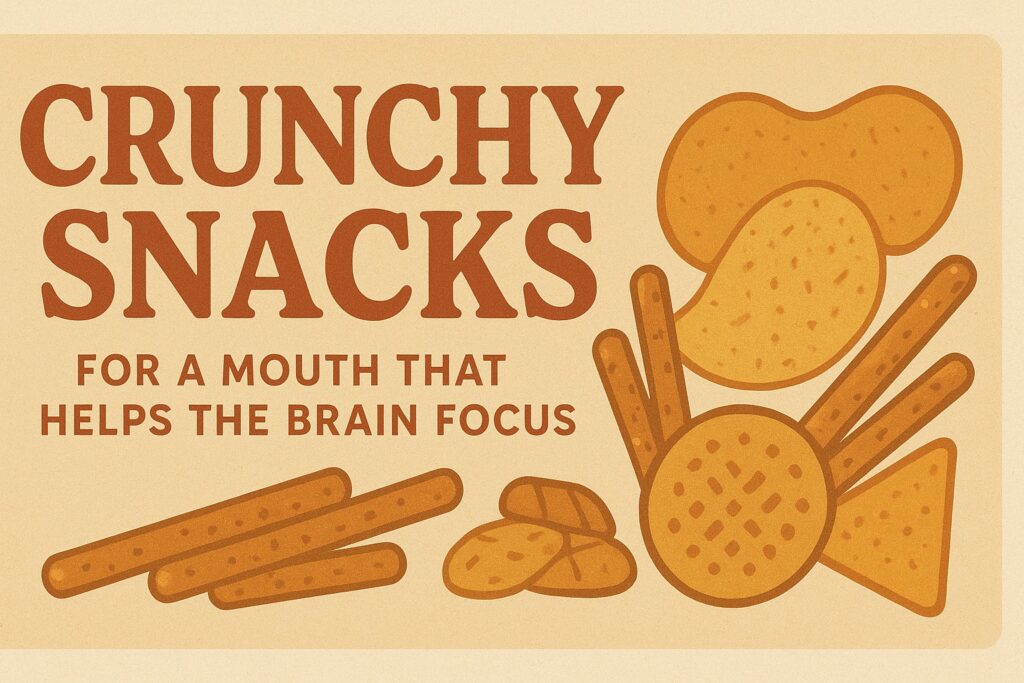
Crunchy Snacks – For a Mouth That Helps the Brain Focus
Before homework, Aarav munches on carrots, apples, or makhana.
Why crunchy? Because chewing isn’t just eating — it’s sensory regulation.
- The trigeminal nerve, connected to the jaw muscles, sends rhythmic signals to the brainstem.
- That rhythmic input helps the brain feel organized and calm.
- It’s why adults chew gum when stressed — the body is trying to self-regulate.
Every crunch tells Aarav’s nervous system, “You’re safe. You’re steady.”
The Shift
Two weeks later, meltdowns weren’t gone — but they changed.
They came slower. Softer.
And most days, Aarav could name what he felt before his brain tipped over.
His parents didn’t “fix” him.
They learned to work with his brain, not against it.
For Every Parent Reading This
Meltdowns aren’t signs of weakness.
They’re messages from a nervous system asking for help.
You don’t have to wait for the storm.
You can design calm into your child’s day —
🟢 Jump breaks for the body
🟢 Nature breaks for the senses
🟢 Crunchy snacks for the mouth
Small rhythms. Big regulation.
Because prevention is not control — it’s neuroscience in action.