
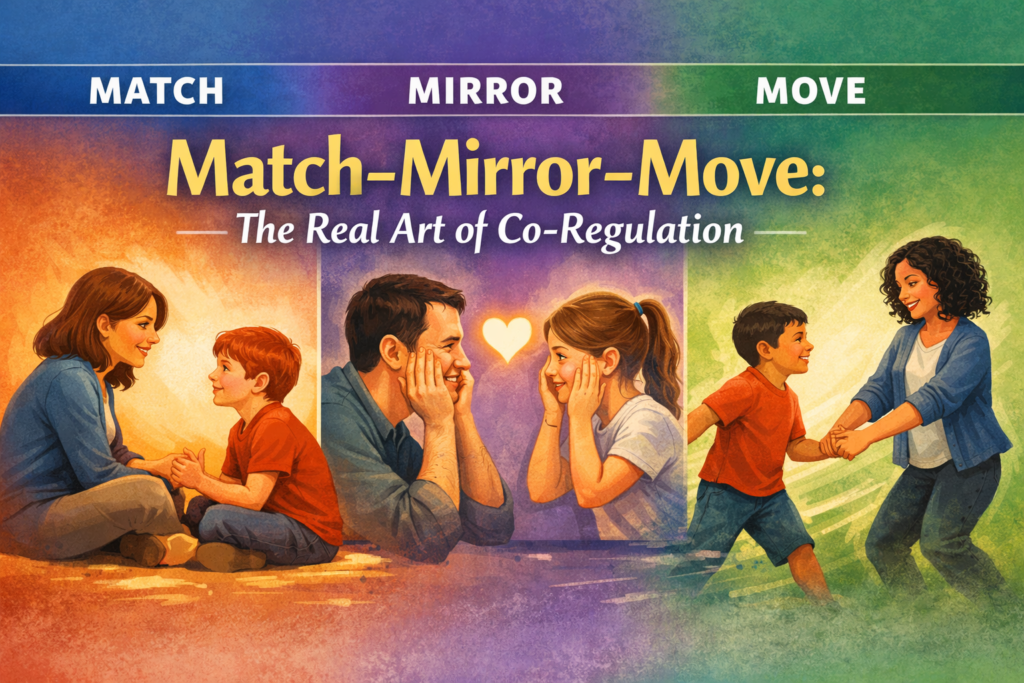
We’ve long been told that being “regulated” means being calm.
But what if that’s not true at all?
What if regulation isn’t about calmness — but connection?
Think about this: when a child is having a meltdown, and you take a deep breath, plaster on a forced smile, and say in a low, soothing tone, “It’s okay… calm down…” — does it really work?
Usually not.
Because deep down, they feel it — the mismatch. The child senses when our calm is performative, not authentic.
That’s where the concept of Match–Mirror–Move changes everything.
Step 1: Match — Feel Before You Fix
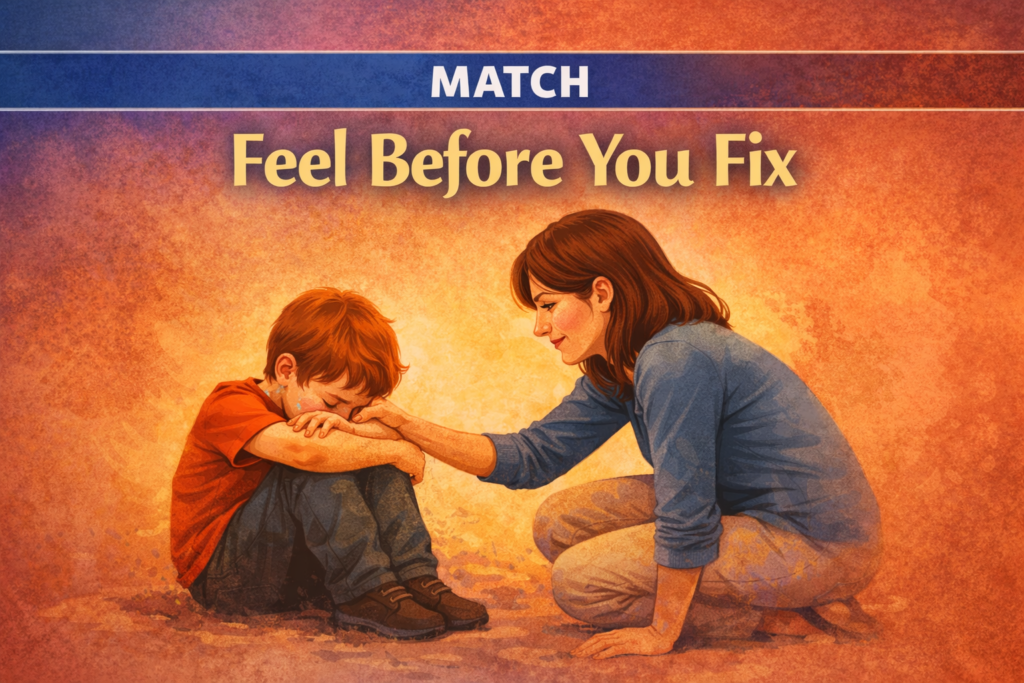
A few weeks ago, I watched a mother sit on the floor beside her 4-year-old son who was crying over a broken toy. Instead of rushing to say, “It’s okay, we can fix it,” she simply sighed softly and said, “That’s really sad, huh? It broke.” Her voice carried the same weight as his emotion — not over-the-top, not detached — just real.
In that instant, his body softened. He leaned into her.
That was matching.
To match is to tune in — not to their behavior, but to their energy.
It means noticing their tone, their breathing, their body.
It’s about saying, through presence:
“I get you. I feel where you are.”
And here’s the secret — you can’t match another person unless you’re connected to yourself first. True co-regulation starts from internal authenticity, not performance.
Step 2: Mirror — Reflect to Connect

Once safety and resonance are built, comes the next part — Mirror.
Imagine a teacher kneeling beside a child who’s hiding under a table, refusing to come out. Instead of demanding compliance, she crouches too, looks softly, and says, “Looks like you need a little space right now.”
Her body, tone, and words mirror the child’s need — not to control, but to understand.
Mirroring is about showing empathy through your actions.
It can be a nod, a gentle phrase, or a shift in your tone that says:
“I see you. I hear you. You’re not alone.”
When we mirror, we help children become aware of their own state. We help their nervous system say, “I’m safe here.” And that’s where regulation begins — not in silence or forced calm, but in shared understanding.
Step 3: Move — Shift with Respect
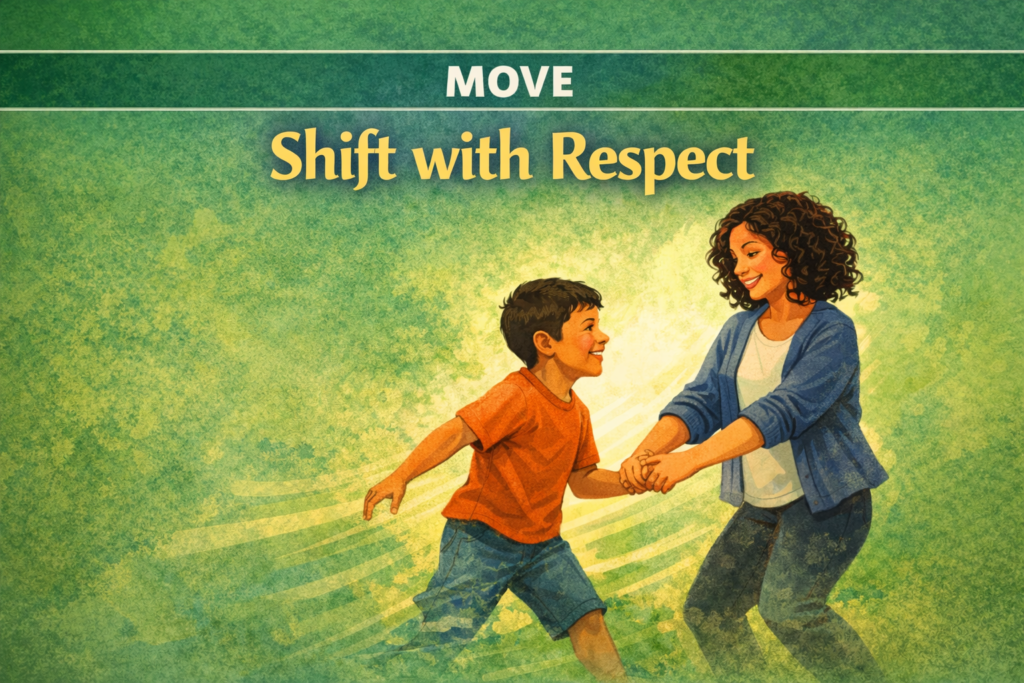
Once connection is made through Match and Mirror, we gently Move — not to push, not to fix, but to invite change.
A therapist once shared this moment: a child was spinning endlessly, overwhelmed. Instead of stopping him, she spun a few times too — then slowly slowed down, breathing deeply. Within moments, the child matched her rhythm, then stopped.
That’s Move — the art of inviting regulation, not demanding it.
Move could mean slowing your speech, modeling deep breaths, offering a new activity, or simply saying, “Let’s walk together.” It’s not about controlling behavior; it’s about co-creating calm.
When we Move with compassion, we teach that change is safe.
Co-Regulation Isn’t About Calm — It’s About Connection
Match–Mirror–Move reminds us that emotional safety doesn’t come from control or correction.
It comes from authentic presence.
When we meet children — or anyone — in their truth without judgment, when we mirror their emotions with empathy, and when we gently guide them toward regulation, we create something powerful: trust.
Because co-regulation isn’t about silencing emotions.
It’s about saying, “You can be exactly who you are right now — and I’ll be here with you.”
And from that place, real growth, learning, and healing can finally begin.
💡 For educators, therapists, and parents — Match–Mirror–Move isn’t just a strategy. It’s a mindset. A way of being that transforms moments of chaos into opportunities for connection. Because children don’t need perfect adults — they need present ones.