
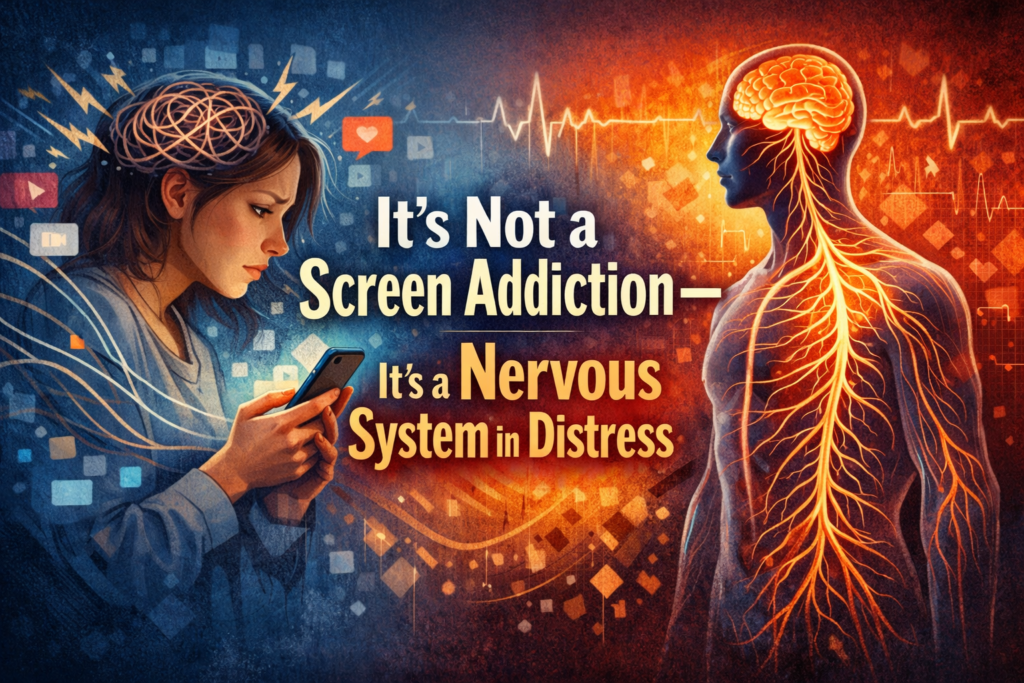
Most parents think their kid is “addicted to screen time.”
I disagree.
Addiction implies pleasure — a choice made for enjoyment. But what’s happening with our children isn’t about joy. It’s about regulation.
Your child isn’t glued to a screen because it’s fun.
They’re glued because it’s soothing.
Because in that digital world, they don’t have to feel lonely, bored, anxious, or unseen. The screen isn’t a hobby — it’s a coping mechanism.
And that should make us pause.
Because when a child’s only tool for emotional regulation comes from pixels, we’re not looking at a screen problem anymore — we’re looking at a nervous system problem.
The Brain Behind the Scroll
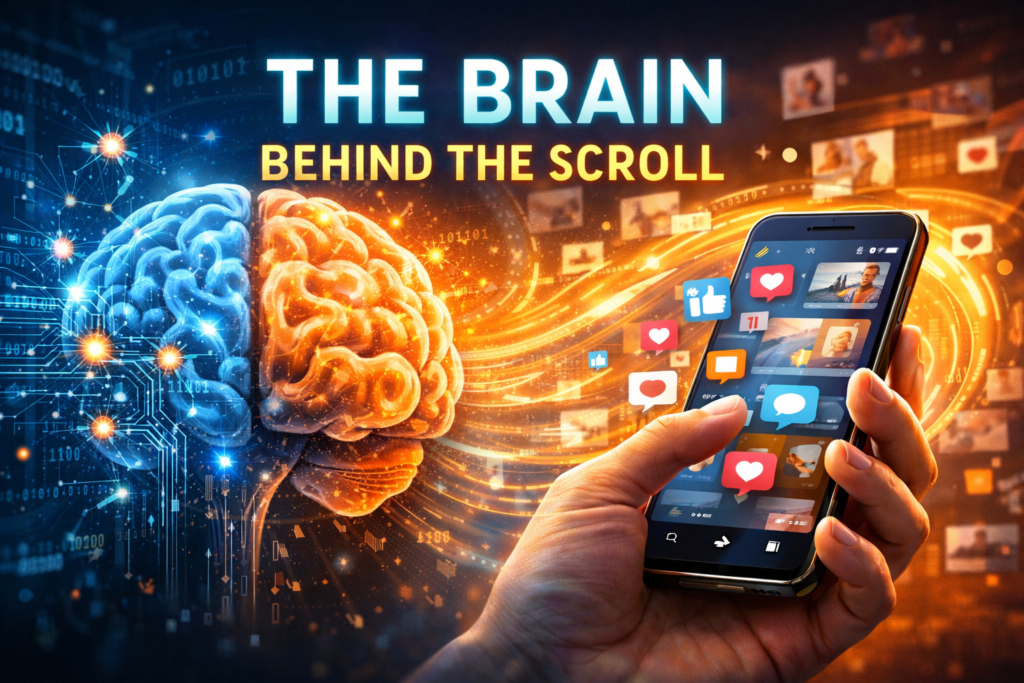
Here’s what’s really happening inside that little brain:
- The dopamine loop: Every tap, scroll, or “next video” delivers a micro-dose of dopamine — the brain’s reward chemical. Over time, this creates a “dopamine dependency,” where the brain needs constant novelty just to feel normal.
- The stress-response hijack: When life feels overwhelming, the amygdala (the brain’s alarm system) activates. Normally, co-regulation — a calm parent’s presence — helps the child’s nervous system settle. But when that isn’t available, the screen takes over as a synthetic regulator.
- The prefrontal cortex shutdown: This area — responsible for self-control, focus, and decision-making — is still developing well into adolescence. High screen engagement overstimulates the limbic system (emotion brain) and under-engages the prefrontal cortex, impairing the child’s natural capacity to self-soothe.
So when your 10-year-old can’t sleep without YouTube, or melts down when you take the tablet away, it’s not “bad behavior.” It’s a sign of a dysregulated nervous system that’s learned to find safety only through digital input.
Stop Asking “How Much Screen Time Is Too Much?”
That question misses the point.
The real question is: “What is my child trying to escape from?”
Because every compulsive behavior hides a pain underneath.
- If school is overwhelming → the screen becomes anesthesia.
- If friendships are hard → the screen becomes a buffer.
- If home feels chaotic → the screen becomes predictable safety.
Until we name what the nervous system is trying to avoid, we’ll keep treating the symptom — not the cause.
What the Brain Actually Needs
The antidote isn’t another timer, app, or angry confiscation. Those might control behavior, but they don’t heal regulation.
The brain heals through rhythm, repetition, and safety — not restriction.
Try this instead:
- 🌿 Rhythmic movement: Walk together after dinner. Movement integrates sensory input and helps discharge stress hormones like cortisol.
- 🍳 Hands-on tasks: Cooking, kneading dough, watering plants — these activities activate the somatosensory system and rebuild grounded awareness.
- 🎶 Auditory regulation: Let them lie down and listen to calming music. The auditory nerve connects directly to the vagus nerve, promoting relaxation.
🤝 Connection over correction: Instead of saying, “You’ve had enough screen time,” try, “Looks like today was a lot. Want to sit with me for a bit?” Emotional co-regulation rewires safety faster than any app ever could.
The Shift That Changes Everything
When we stop fighting screens and start understanding the nervous system underneath, everything changes.
You realize that:
- Discipline without connection feels like deprivation.
- Taking away a coping tool without replacing it creates panic.
- Real healing happens when a child learns their body can calm without external stimulation.
The goal isn’t to eliminate screens — it’s to expand your child’s capacity to feel safe without them.
Because when they can rest, breathe, and play in the real world — without needing the dopamine drip — they’re not just surviving life anymore.
They’re living it.